Vote YES on Measure E to keep Redwood City affordable!
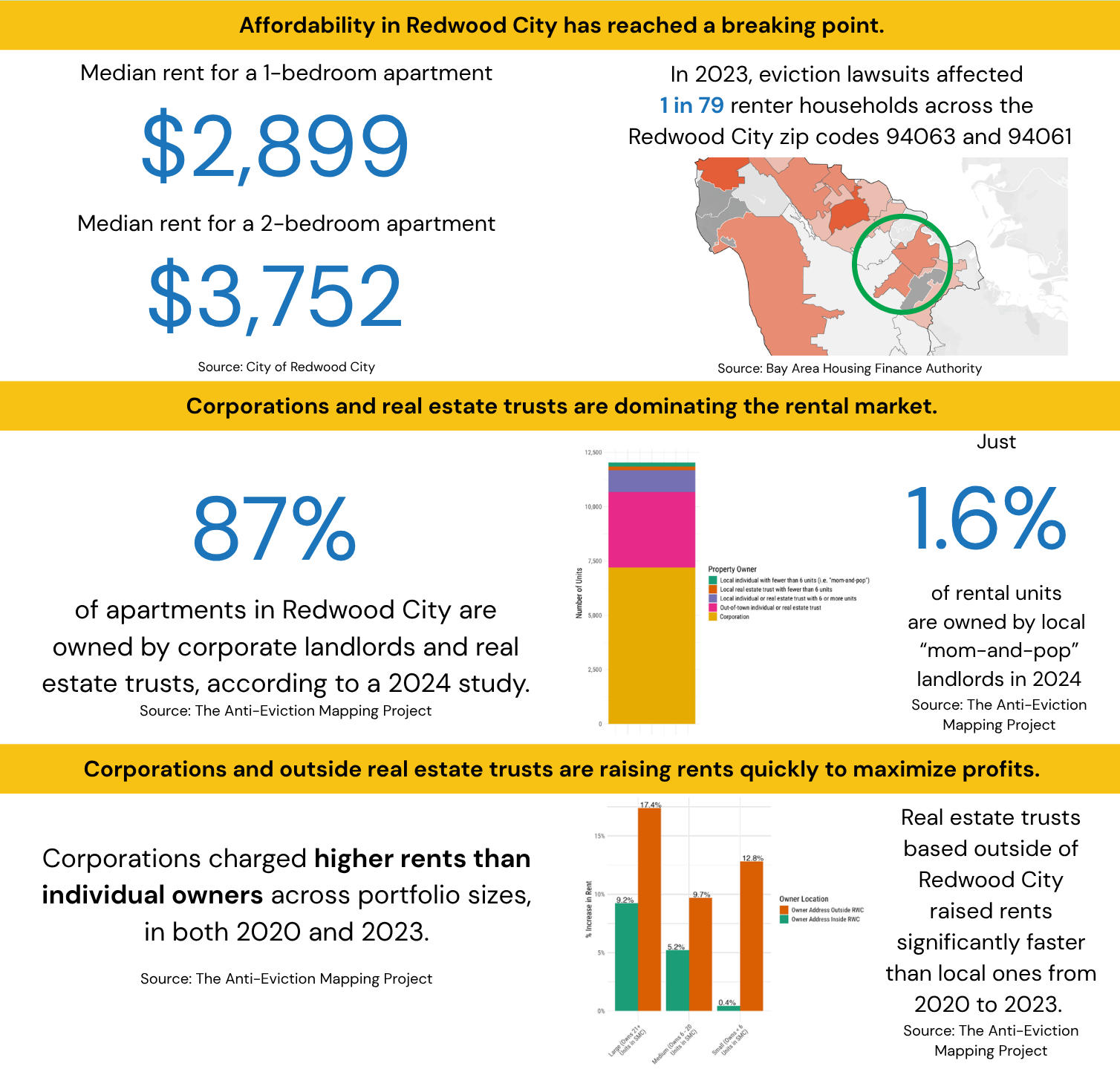
Redwood City renters are facing a crisis
Measure E will:
Keep costs stable by allowing predictable rent increases of 60% of inflation or 5%, whichever is lower.
Guarantee landlords a fair return on their investment—if costs increase, a landlord can petition the city for a larger rent increase.
Only allow evictions if there is a “just cause” (e.g. failure to pay rent, breach of lease, owner moving into the unit).
Protect against landlord use of intimidation and lack of repairs to push people out of their homes.
Prevent homelessness through higher relocation assistance for no-fault evictions.
Measure E will be funded by a small fee on landlords—not paid for by homeowners, renters, nor the city’s general fund.
Measure E will keep our neighbors in their homes
Frequently Asked Questions
How will Measure E support renters?
Rent control is a proven strategy to address unaffordable housing markets by keeping rents stable so current residents can stay in their homes. Renter protections prevent unfair evictions, displacement and homelessness. It’s working in nearby cities like Mountain View and East Palo Alto, and it will work here too!
Who is protected by Measure E?
According to an April 2026 report by Urban Habitat, the protections provided by Measure E will ensure that approximately 40,000 people have increased housing stability in Redwood City. This includes nearly 5,000 children under the age of 18 and 6,250 seniors.
The report notes that these protections are especially important for low-income residents, immigrants, seniors, and people living with a disability.
How will Measure E affect small landlords?
Most small landlords are community-minded and already limit rent increases to reasonable levels, and if their operating costs increase, they can petition the city for a higher rent increase. Measure E ensures a fair return on their investment.
The real problem in Redwood City is that corporate landlords have now bought up 87% of multifamily housing in Redwood City, and they are driving up rents in pursuit of more profits.
How will Measure E affect building new housing?
Under state law, rent control doesn’t apply to buildings built since 1995 or single family homes. We need to build more homes for our future, and new construction (market-rate or affordable) won’t be affected by rent control.
How will Measure E be implemented?
Measure E creates a department at the city to enforce the law, paid for by a fee on landlords. The fee will pay for City staff to collect the landlord fee, establish annual guidelines, provide community education, connect tenants and landlords to legal services, collect data on rental rates, and supervise the process for petitions and hearings. It will be overseen by the City Manager and the City Council.
What will Measure E cost?
The California Apartment Association and its allies on the City Council have shared misleading information making it seem as if the city would have to dip into its General Fund to pay for Measure E. The truth is that the text of the measure explicitly prohibits use of the city’s General Fund for implementation and requires that costs be paid by a fee on landlords:
Section 42.14 D(1): “The Council shall finance the reasonable and necessary expenses of the Program by charging landlords an annual rental housing fee.”
Section 42.14 D(2): “staff to enforce this chapter shall be funded only by the rental housing fee and not from the City’s general fund”.
Measure E will be paid for by a fee on landlords, per unit that they own, NOT by the taxpayers or by homeowners. The corporate landlords that own the majority of apartments in Redwood City will pay the largest share of the fees.
This approach to funding the implementation of rent control works in 30+ cities in CA, including Mountain View. In Mountain View, a city of comparable size, landlords pay $130 per unit per year (around half of a Netflix subscription) to fund 7 city employees to implement the program. This approach will work for us too.
How will Measure E affect affordable housing?
Rent control and building more affordable housing go hand in hand. Rent control will keep Redwood City families in 6,300+ apartments in their homes and in our community now. And, we need to build more homes for the future: Rent control doesn’t apply to buildings built after 1995, so the construction of new affordable housing won’t be affected.
Measure E will provide renter protections for 40,000 of our neighbors, giving them additional stability. This includes about 600 families living in affordable housing in Redwood City that was built before 1995, who will also be protected by rent control. If affordable housing developers feel that they need to raise rents beyond the allowed limits, like any landlord they can petition the city for higher rent increases.
Why does Redwood City need Measure E?
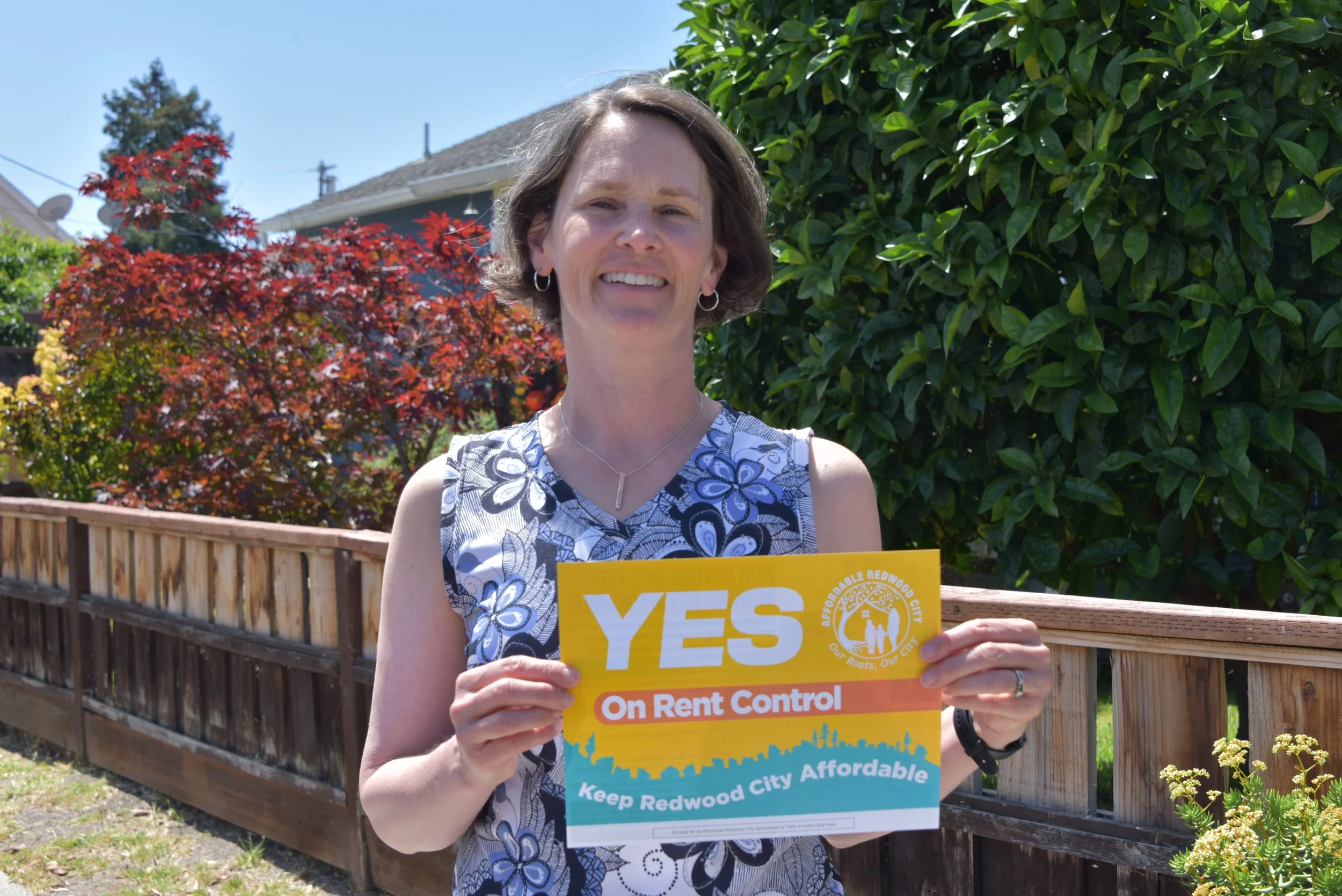
Mom and pop landlords, homeowners, and longtime Redwood City renters all agree: Rent control will keep Redwood City affordable and create stability for our community.
Corporate landlords and real estate trusts have bought up 87% of multifamily housing in Redwood City, and rents have skyrocketed. Our children can’t find housing here. Our teachers, city employees, and essential workers live far away and commute for hours.
Residents are getting rent hikes of $350 a month, which may be higher once the temporary 10% state rent cap expires. Families are forced out by unjust evictions, intimidation, or health problems from neglected repairs. Seniors are at risk of homelessness.
With Measure E, Redwood City will join 30+ cities around California that have enacted fair rent control and meaningful renter protections, including Mountain View and East Palo Alto.